
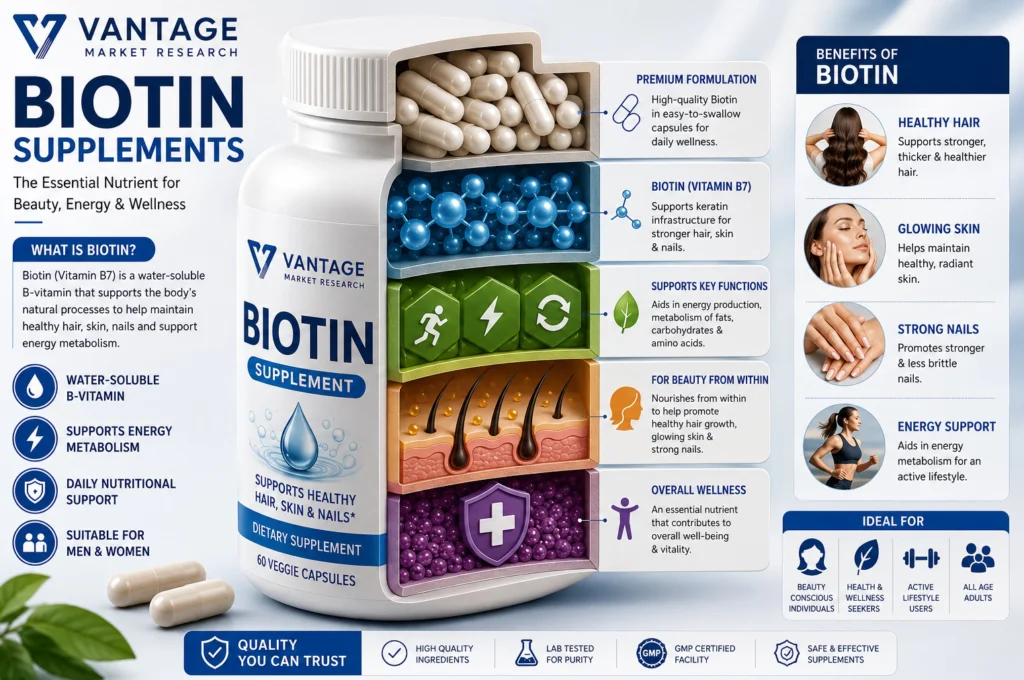
No one puts biotin on a vision board. It doesn’t have the cultural cachet of collagen, the hype of GLP-1s, or the TikTok virality of a $60 serum. And yet, quietly, in the background of every “hair, skin & nails” gummy on the shelf, it’s building one of the steadiest, most resilient growth stories in the entire wellness industry.
This is what a real market opportunity looks like before anyone’s paying attention to it.
A note on the numbers
Market-size estimates for biotin vary significantly by source, depending on scope. Reports on the “biotin supplement market” alone range from roughly $1.9 billion to over $5 billion for 2025–2026, while broader “biotin ingredient market” reports (which include industrial, food-fortification, and cosmetic-grade biotin) push closer to $2.4 billion. Reported CAGRs range from about 4.8% to over 10%, depending on methodology and forecast window. Rather than quote one number as gospel, the honest takeaway is: multiple independent research firms agree this market is growing at a mid-to-high single-digit to low-double-digit CAGR through the early 2030s — a genuinely healthy growth category, even if the exact billions are debated.
What’s actually driving growth
→ Beauty-from-within is now mainstream, not niche. Consumers increasingly view supplements as part of their daily beauty routine, not a separate health category. Biotin sits at the center of this because of its established link to hair, skin, and nail health.
→ Hair health is the single biggest application segment. Multiple reports place the hair-health/nail-care segment at roughly 35–39% share of the biotin supplement market — by far the largest use case, ahead of general metabolic health.
→ Gummies and format innovation are reshaping the category. Capsules and tablets still lead in market share, but gummy formats are one of the fastest-growing product forms, especially among younger consumers who prioritize convenience and taste over traditional pill formats.
→ E-commerce and DTC channels are now dominant distribution paths. Online retail has overtaken pharmacy and supermarket channels as a leading distribution channel in several recent reports — a structural shift in how supplement brands reach consumers.
→ Nutricosmetics is blurring the line between beauty and supplements. Biotin’s positioning at the intersection of personal care and dietary supplementation is driving product-line extensions from both beauty brands and traditional vitamin manufacturers.
Regional picture
→ North America currently leads, holding roughly 35–42% global market share depending on the source — driven by high supplement penetration, strong DTC brand ecosystems, and consumer familiarity with the “beauty-from-within” narrative.
→ Asia Pacific is the fastest-growing region, with CAGR estimates around 9% through the early 2030s. Rising disposable incomes, expanding middle classes, and growing wellness culture across China, India, South Korea, and Southeast Asia are the key drivers.
→ Europe holds a meaningful but smaller share, with growth tracking more moderately than APAC.
What to watch next
- Personalized nutrition: biotin formulations tailored to individual deficiency profiles or combined with other targeted actives (collagen, zinc, keratin blends)
- Plant-based and clean-label positioning: rising demand for biotin sourced and marketed as plant-based or “clean,” particularly among Gen Z and Millennial buyers
- Cross-category brand extensions: beauty and skincare brands moving into ingestible biotin products, and vice versa
- Regulatory and labeling scrutiny: as the category grows, expect more attention on dosage claims and absorption/efficacy substantiation
The bottom line
Biotin isn’t a flashy trend story — it’s a durable, steadily compounding category sitting at the intersection of beauty, wellness, and functional nutrition. For brands and investors, the real opportunity isn’t the base biotin ingredient itself, but the formats, formulations, and channels wrapped around it: gummies over capsules, DTC over traditional retail, and personalized blends over one-size-fits-all supplementation.